How to Verify Food Grade Materials in Disposable Pop-Up Cooking Thermometers
How to Verify Food Grade Materials in Disposable Pop-Up Cooking Thermometers
Verifying food grade materials in disposable pop-up cooking thermometers involves checking compliance with recognized safety standards such as FDA and EU certifications, confirming the use of approved substances like PA66 nylon for high-temperature stability, and ensuring components are free from harmful chemicals such as heavy metals or BPA. Reliable verification guarantees thermometers are safe for direct food contact and maintain sensor accuracy within ±2°F.
Industry Background: Importance of Food Grade Materials in Cooking Thermometers
Disposable pop-up cooking thermometers are widely used in meat processing, poultry, and frozen food industries to ensure products reach safe internal temperatures. As these devices come into direct contact with food, verifying that all materials comply with strict food safety regulations is critical. Non-food grade components can lead to contamination risks, product recalls, and damage to brand reputation. Therefore, manufacturers and B2B buyers prioritize stringent material verification processes to uphold consumer safety and regulatory compliance.
Technical Specifications & Material Safety
PopNReady’s disposable pop-up thermometers utilize food-grade PA66 (polyamide 66), known for its exceptional thermal stability at cooking temperatures, chemical resistance, and mechanical strength. This nylon compound withstands prolonged heat exposure without degradation, preventing harmful migration of substances into food.
The temperature sensing mechanism employs a proprietary food-safe wax blend devoid of heavy metals or soft metals, ensuring no toxic residues even under high heat. The entire assembly, including the housing and metal springs, is certified FDA, EU, and BRC compliant, guaranteeing adherence to international food safety standards.
Accuracy is crucial; our thermometers maintain ±2°F precision through calibrated sensor wax melting points and robust mechanical design. This ensures reliable temperature indication essential for safe cooking and quality control.
Why Source from PopNReady (The Direct Factory)
Since 2006, PopNReady has specialized exclusively in disposable pop-up timers, supplying global B2B clients directly from our factory. Our direct-source manufacturing eliminates middlemen, delivering competitive factory direct pricing and consistent product quality without markup.
We support bulk orders and customized OEM solutions, including:
- Custom activation temperatures tailored to specific product requirements
- Logo injection molding for on-brand timer housings
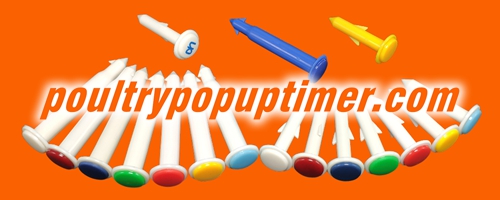
- Color customization for easy visual identification in production lines
This flexibility combined with 18 years of industry focus assures procurement managers of both reliability and supply chain security when partnering with us.
People Also Ask (PAA) - Common Verification Questions
What certifications confirm a thermometer is food grade?
Look for FDA, EU food contact approvals, and BRC certification which collectively verify materials are safe for direct food contact.
How can I verify the materials used in pop-up thermometers?
Request detailed material declarations, third-party lab test reports, and Certificates of Analysis (COA) showing compliance with food safety regulations.
Is PA66 suitable for high-temperature cooking environments?
Yes, PA66 nylon offers excellent thermal resistance up to 250°C, making it ideal for disposable cooking thermometers exposed to roasting or boiling.
Why is BPA-free important in thermometer materials?
BPA-free plastics reduce health risks by eliminating bisphenol A, a chemical linked to hormonal disruptions, ensuring safer consumer products.
Can custom logos be added to pop-up thermometers?
Yes, many manufacturers offer logo injection technology allowing permanent branding on timer housings without compromising food grade status.
How precise are disposable pop-up cooking thermometers?
Top-quality thermometers achieve a precision of ±2°F, critical for accurate cooking to prevent undercooked or overcooked products.
What should I check to avoid supply chain risks?
Sourcing from a direct-source manufacturer with transparent supply chains and verified compliance minimizes risks of delays or counterfeit products.
Conclusion and Call to Action
Verifying food grade materials in disposable pop-up cooking thermometers requires thorough evaluation of certifications, material composition, and manufacturing practices. Partnering with an experienced direct-source manufacturer like PopNReady ensures access to high-precision, compliant, and customizable thermometers delivered with factory direct pricing advantages.
Contact our factory experts today to request a free sample or get a personalized quote. Leverage our 18 years of expertise and global OEM capabilities to secure reliable food grade thermometers that safeguard your product quality and brand integrity.
Frequently Asked Questions
Q1: How do I confirm the thermometer’s materials are FDA approved?
A1: Obtain Certificates of Compliance and third-party lab test reports from your supplier demonstrating FDA food contact approval.
Q2: Can disposable pop-up thermometers be customized?
A2: Yes, options include custom temperatures, colors, and logo injection directly from the factory.
Q3: What makes PA66 preferable over other plastics?
A3: Its superior thermal stability and chemical resistance make it ideal for repeated exposure to cooking heat without degrading.
Q4: Are there risks if the materials are not food grade?
A4: Non-food grade materials can leach toxins, cause contamination, and lead to regulatory penalties and recalls.
Q5: How can factory direct sourcing improve cost efficiency?
A5: It removes intermediaries, reduces markup, and provides better control over product specifications and supply reliability.